Turkish Olive Oil: Grades, Regions and the Four EU-Protected Names (2026 Buyer's Guide)
Turkish olive oil comes mostly from the Aegean coast of Türkiye, now the world's second-largest olive oil producer after Spain. To buy well, read three things on the bottle: the Turkish grade name (naturel sızma means extra virgin), a named region or one of Türkiye's four EU-protected olive oils, and the harvest year.
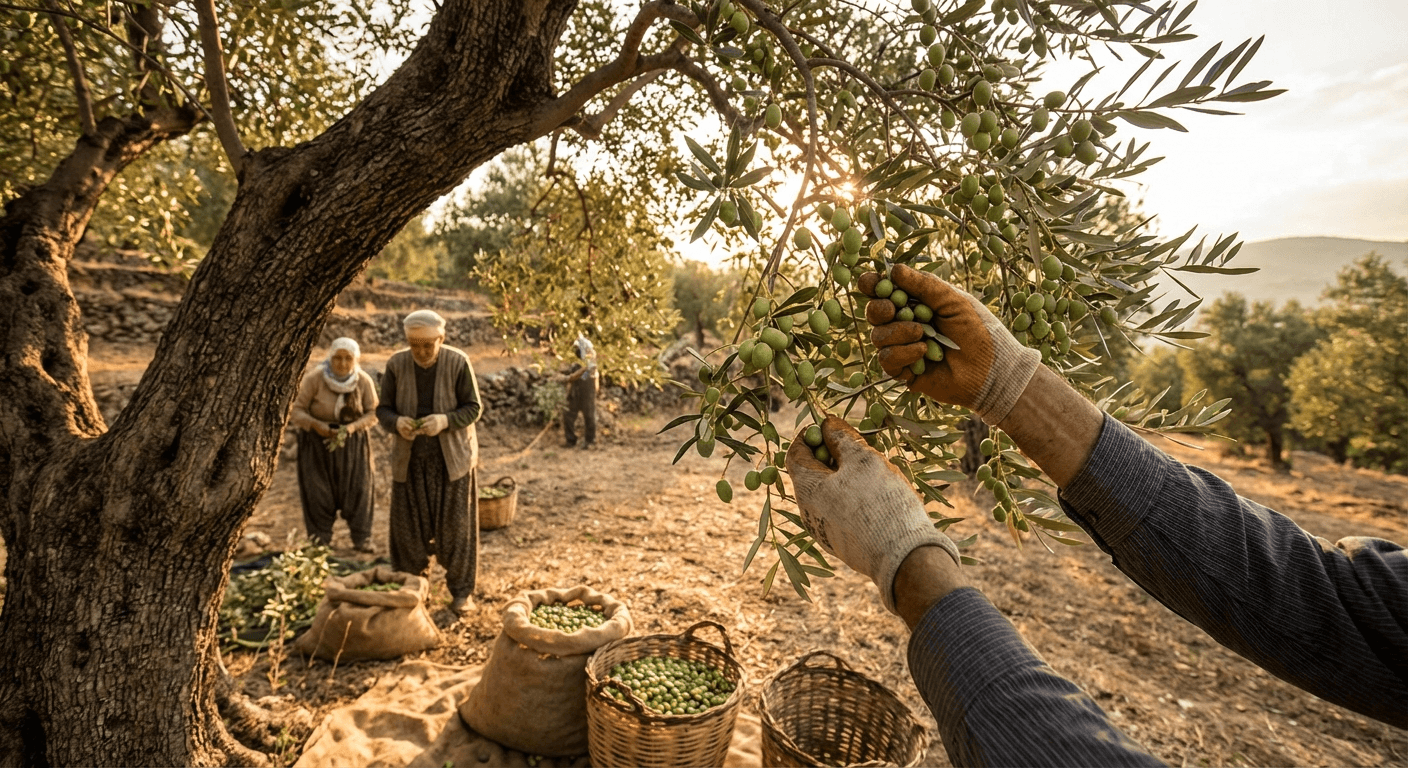
Turkish olive oil is olive oil pressed in Türkiye, and most of it comes from the Aegean coast, from two native olives: the mild Ayvalık in the north and the green, peppery Memecik in the south. Türkiye is now the world's second-largest olive oil producer after Spain. To buy a good bottle, read three things on the label: the Turkish grade name (naturel sızma means extra virgin), a named region or one of the country's four EU-protected olive oils, and the harvest year.
How much olive oil does Türkiye produce?
Many English-language guides still describe Türkiye as the fourth-largest producer with about 200,000 tonnes a year. Those numbers are out of date. According to International Olive Council figures reported by Anadolu Agency in January 2026, Türkiye produced 505,000 tonnes in the 2024/25 season, 58% above its average year. That put it second in the world after Spain and ahead of Italy, and first for table olives. Olive trees alternate between heavy and light years, so the 2025/26 crop was expected to fall by 43% to about 290,000 tonnes. In June 2026 the Aegean Olive and Olive Oil Exporters Association said it expects a record olive crop again in 2026/27. For buyers, scale cuts both ways: a big harvest means more choice and keener prices, but also more anonymous bulk oil. The country name tells you little; the grade, region and harvest date tell you much more.
Turkish olive oil label terms, translated
Türkiye defines its grades in the Turkish Food Codex Communiqué on Olive Oil and Olive Pomace Oil (2017/26). These are the words you will meet on a Turkish bottle:
- Naturel sızma zeytinyağı: extra virgin olive oil. Mechanical extraction only, free acidity of 0.8% or less, no sensory defects. Our guide to what extra virgin really means covers the details.
- Naturel birinci zeytinyağı: virgin olive oil, also mechanical, with acidity up to 2.0%.
- Riviera zeytinyağı: a blend of refined olive oil and virgin oils, acidity up to 1.0%. It is sold abroad as plain "olive oil" or "classic". Its low acidity comes from the refinery, not from fresh fruit.
- Rafine zeytinyağı: refined olive oil, acidity up to 0.3% after refining. Mostly used as the base for blends.
- Pirina yağı: olive pomace oil, extracted from the leftover paste and refined.
- Erken hasat: early harvest, from green olives. Soğuk sıkım: cold extraction below 27 °C. Filtresiz: unfiltered. Hasat yılı: harvest year. TETT: best-before date.
Two common errors in English guides are worth correcting. Refined oil does not have acidity "above 2%"; it leaves the refinery at 0.3% or less. And the often-quoted 3.3% figure describes oil before refining, not anything sold to drink.
The four EU-protected Turkish olive oils
A Protected Designation of Origin (PDO) means the olives were grown and pressed in a named area, from a specified variety, to a registered specification. Türkiye has four olive oils on the EU register:
- Milas Zeytinyağı (Muğla): the first, registered in December 2020, made from Memecik olives.
- Edremit Zeytinyağı (Balıkesir): approved in July 2023, from the Gulf of Edremit's Ayvalık (Edremit) olive.
- Aydın Memecik Zeytinyağı (Aydın): published in the EU Official Journal in October 2023, Memecik from the Büyük Menderes basin.
- Mut Zeytinyağı (Mersin): entered in July 2025, Türkiye's fourth and the only one from the Mediterranean coast.
A bottle that carries one of these names, with the EU PDO seal, has a traceable origin that "Turkish" alone never guarantees. Our guide to Milas olive oil and its PDO explains the oldest of the four.
North or south: is Turkish olive oil mild or peppery?
Both, and the region tells you which. Several guides call Turkish oil "mild, almost buttery". That fits the northern Aegean, where the Ayvalık olive dominates. In a 2023 Molecules comparison of five Turkish cultivars, Ayvalık oil had the lowest total phenolic content (234.7 mg/kg) and the softest bitterness. South of İzmir, Memecik takes over, and pressed early it gives a green, grassy oil with clear bitterness and a peppery catch in the throat. Harvest timing matters as much as variety: the same tree gives a softer oil when its fruit is picked riper, later in the season. Our Aegean olive oil guide maps both coasts in more detail, and the Memecik olive oil page covers the southern variety.
How to choose a Turkish olive oil
- Grade: "naturel sızma" or "extra virgin". If the front only says "olive oil", it is likely a riviera blend.
- Origin: a district or PDO name (Milas, Edremit, Aydın, Mut) beats "Product of Turkey".
- Variety: Ayvalık for mild and nutty; Memecik for bitter and peppery.
- Harvest year: the current season, ideally with the month.
- Numbers: under the Communiqué, a label that states acidity must also state peroxide value, waxes and UV absorbance. Acidity alone is half a story. Our polyphenols guide explains the other key figure.
- Packaging: dark glass or tin, never clear glass.
For the honest strengths and weaknesses of the sector, read is Turkish olive oil good?
Milasso's Turkish olive oil range
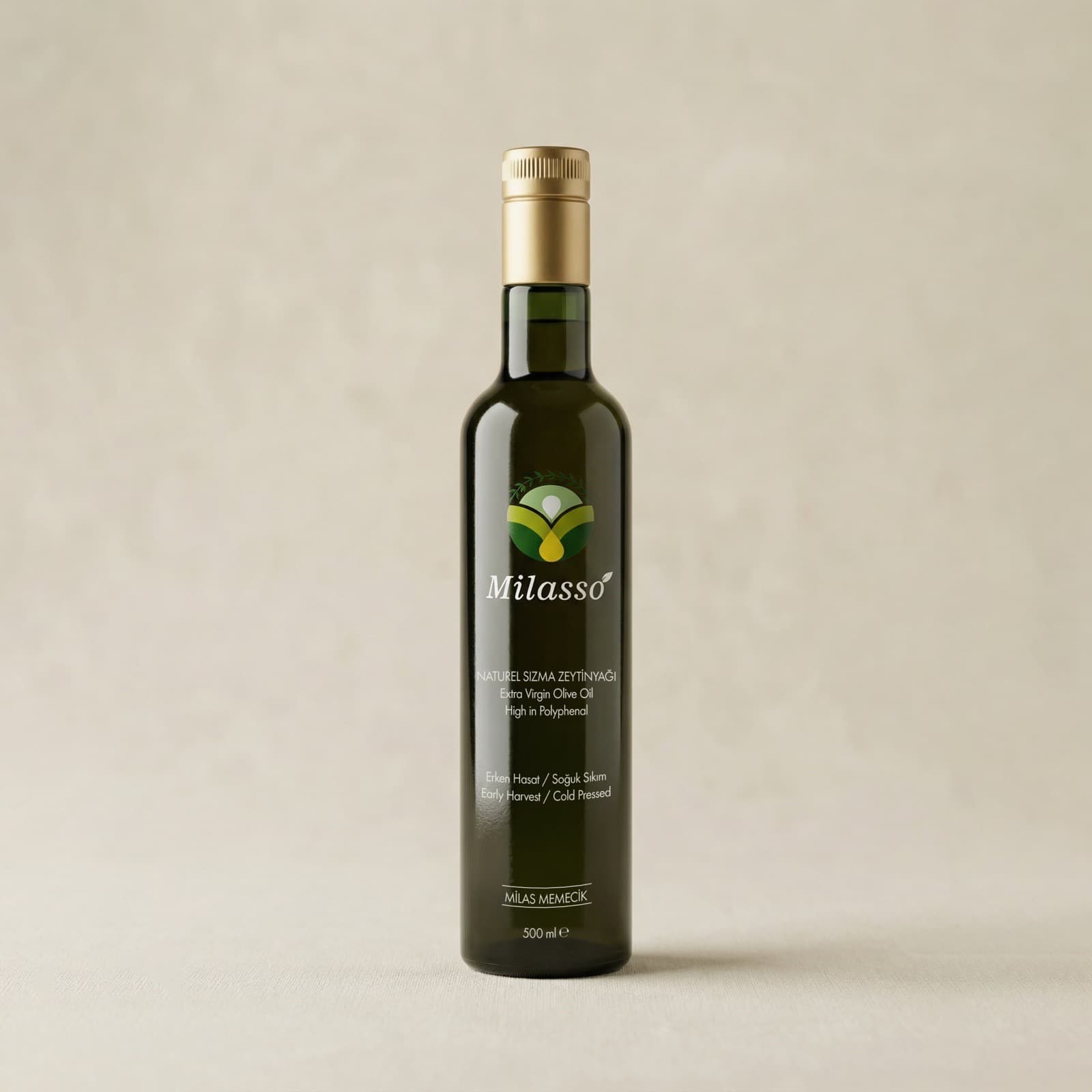
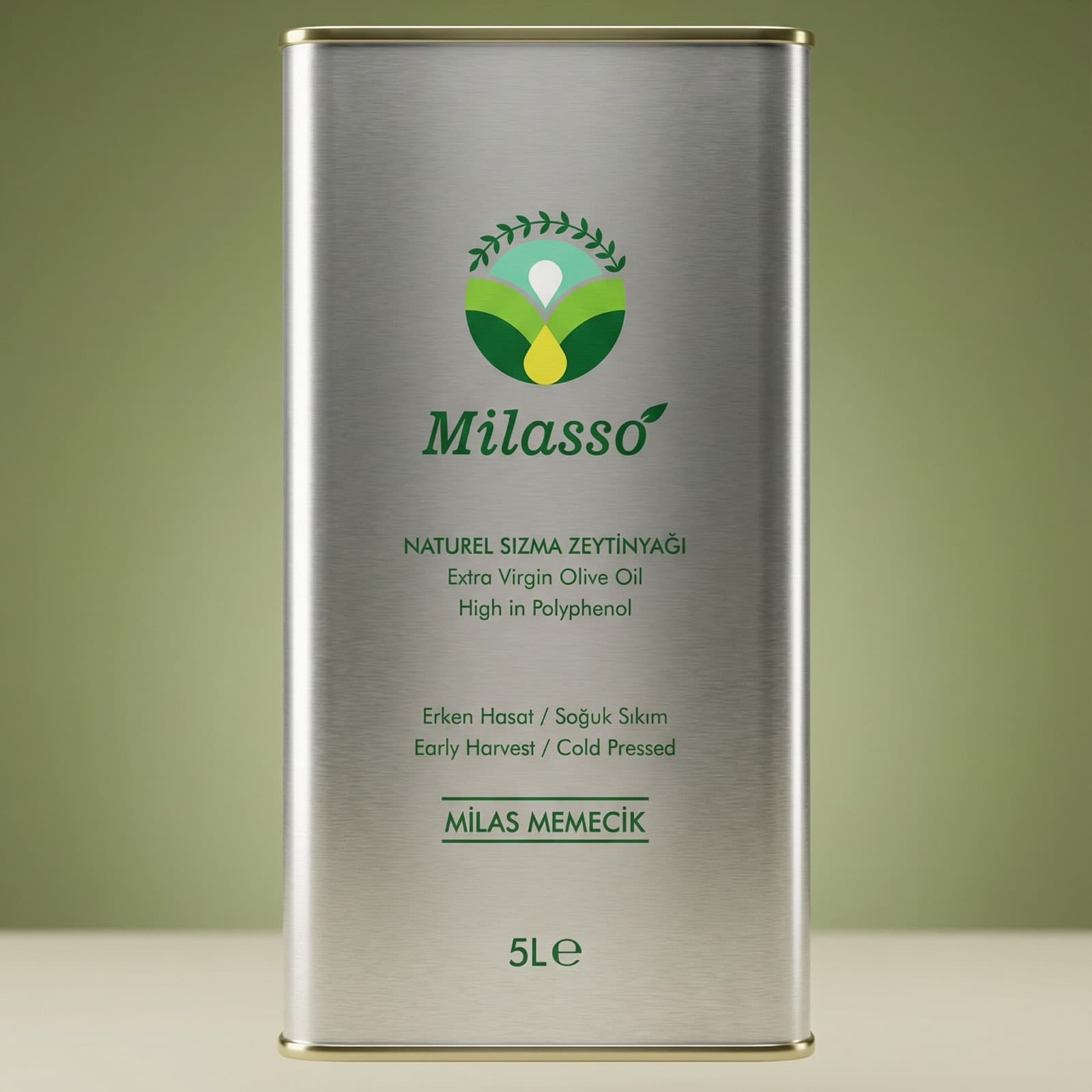
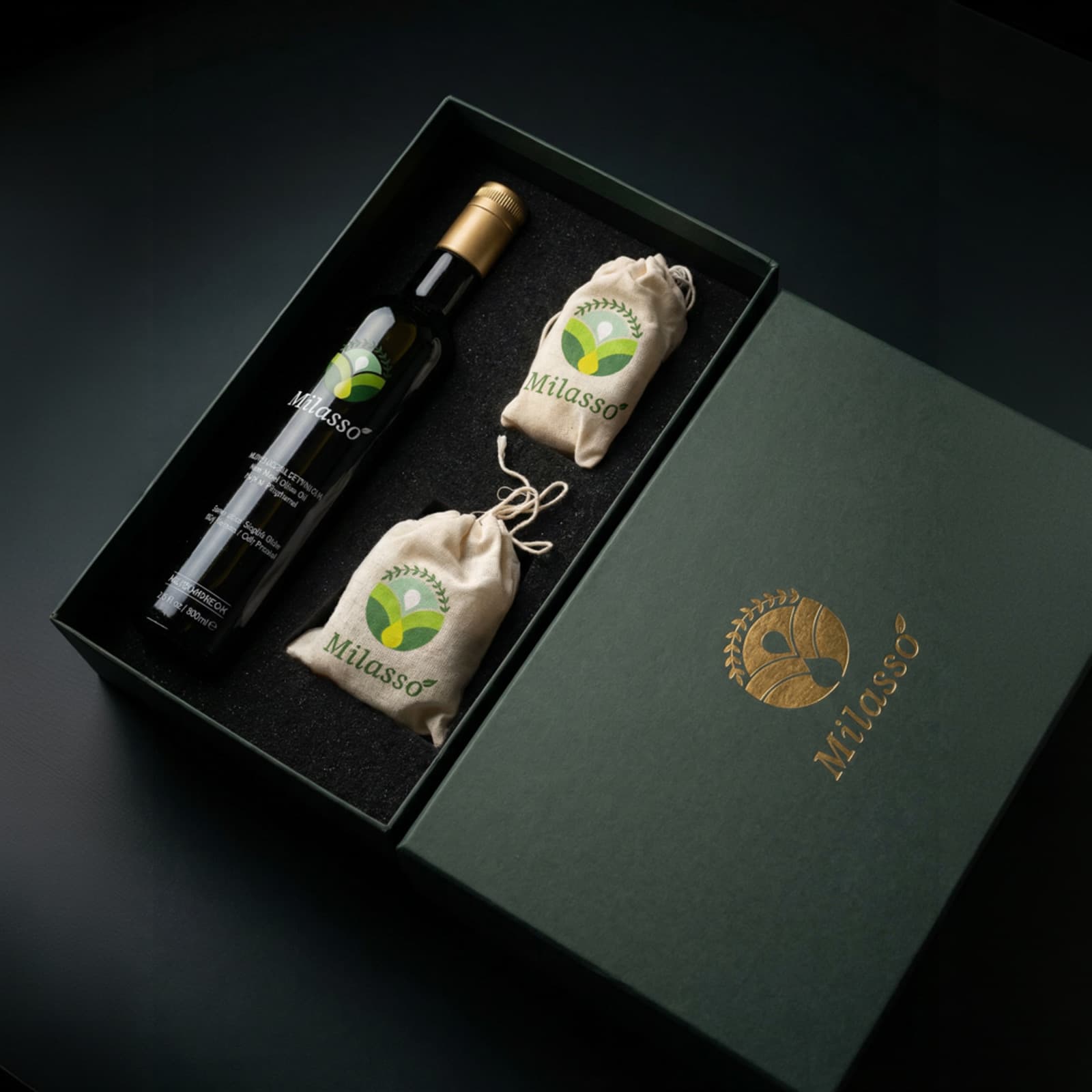
We press Memecik olives from Milas, inside the PDO area at the southern end of the Aegean coast. The olives are picked green, pressed the same day in a closed cold-press system without hand contact, and stored away from light and oxygen. Our lot records log pressing within four hours of picking. Each lot's analysis values are published next to its lot number. Lot 2025-EH-03, picked in October, measured 0.28% acidity, 384 mg/kg polyphenols and a peroxide value of 7.4. Lot 2025-EH-05, picked a month later, measured 0.42%, 287 mg/kg and 8.9: the same trees, gentler oil. The early-harvest Ultra Premium 500 ml (acidity ≤0.3%, polyphenols above 350 mg/kg) is the green, peppery southern style. The Premium 5 L tin is our everyday cooking oil, and the Ultra Premium gift set suits a present. You can browse the full olive oil range. We currently ship within Türkiye.
Frequently Asked Questions
- Is Turkish olive oil good quality?
- It can be excellent, but quality varies widely between bottles. Türkiye's Aegean producers make award-winning early-harvest extra virgin oils, while a lot of Turkish oil is still traded as anonymous bulk. Judge each bottle by its grade (naturel sızma), its region or PDO name, its harvest year and its published acidity and peroxide values rather than by the country on the label.
- What does naturel sızma mean on Turkish olive oil?
- Naturel sızma zeytinyağı is the Turkish legal name for extra virgin olive oil. Under the Turkish Food Codex Communiqué 2017/26 it must be extracted by mechanical means only, have free acidity of 0.8% or less and show no sensory defects. It is the highest grade on Turkish shelves; naturel birinci is the lower virgin grade.
- What is riviera olive oil in Turkey?
- Riviera zeytinyağı is a blend of refined olive oil and virgin olive oils, with acidity of up to 1.0%. Abroad it is usually sold as plain "olive oil" or "classic". It is mild and cheap, which suits frying, but its low acidity comes from refining, and it lacks most of the aroma and polyphenols of extra virgin oil.
- Which Turkish olive oils have EU protected status?
- Four Turkish olive oils are registered as EU Protected Designations of Origin: Milas Zeytinyağı (2020), Edremit Zeytinyağı (2023), Aydın Memecik Zeytinyağı and, since July 2025, Mut Zeytinyağı from Mersin. Milas and Aydın Memecik are made from the Memecik olive, Edremit from the Ayvalık (Edremit) olive. The first three come from the Aegean coast; Mut is from the Mediterranean.
- Is Türkiye the second-largest olive oil producer?
- Yes, in recent seasons. International Olive Council figures reported in January 2026 show Türkiye produced 505,000 tonnes in 2024/25, second only to Spain and ahead of Italy. Output swings between heavy and light years: the 2025/26 crop was expected around 290,000 tonnes, and exporters forecast a record olive crop for 2026/27.
Sources
- Anadolu Agency — Türkiye becomes global key player in table olive, olive oil production (IOC data, January 2026)
- Türk Gıda Kodeksi Zeytinyağı ve Pirina Yağı Tebliği (2017/26) — Resmî Gazete
- TÜRKPATENT — Mut Zeytinyağı and Kırkağaç Kavunu registered in the European Union (July 2025)
- Olive Oil Times — Europe approves PDO for Memecik from Aydın, Turkey
- Korkmaz (2023), Characterization and Comparison of Extra Virgin Olive Oils of Turkish Olive Cultivars, Molecules